
Course – Part of Certificate in Psychoanalytic Thought and Practice Program
Foundations of Psychoanalytic Thought (Fall/Winter 2026)
Facilitators
Michelle van den Engh, MD, FRCPC, FIPA
Bradley Murray, DPhil, MEd, FIPA
Joanne della Penta, ATR-BC, FIPA
Judith Setton-Markus, M.Ed., R. Psych. FIPA
Organizer: Bradley Murray
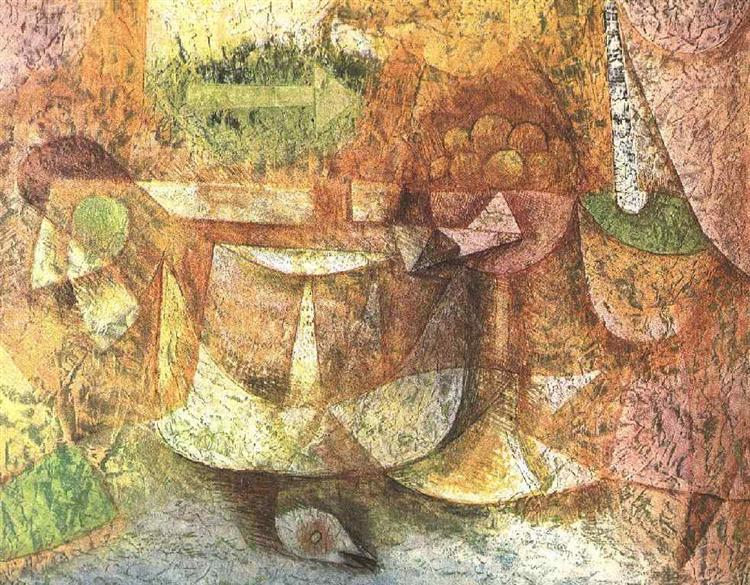
Artwork: Still Life with Dove | Paul Klee | 1931 | Expressionism
This course enables participants from a variety of professional and educational backgrounds to engage with the psychoanalytic perspective. This perspective can be of value whether you are seeking to better understand and empathize with those you help as a clinician (such as a counsellor, social worker, psychologist or physician), or as a professional practicing in a non-clinical discipline (such as education or law).
Questions we will explore include:
• What are the hidden factors that motivate us?
• What should we think of Freud’s legacy?
• What are the different ways we can be of help to others emotionally?
We will explore the evolution of psychoanalytic thought since Freud, and its application to various cultural phenomena.
The format of classes emphasizes discussion in small and large groups, with introductions to the week’s topic by instructors.
The course is designed for those who have completed, or are in the process of completing, a graduate or professional degree.
An optional Certificate of Completion will be available based on attendance and completion of a short written reflection assignment.
The Certificate in Psychoanalytic Thought and Practice is available to those who (i) have completed the Foundations of Psychoanalytic Thought Course, and (ii) have completed a Case Consultation Group.
Dates (12 Tuesdays)
September 15, 22, 29, 2026
October 6, 13, 20,27, 2026
November 3, 10, 17, 24, 2026
December 1, 2026
Time
7:00pm-8:30pm
Location
online
Organizer
Bradley Murray
COST
$375
The 2026 Foundations Course is now full.
If you have any questions about the course, or if you may be interested in joining in the future, please send a message to Bradley Murray at info@wcpsi.org.
Michelle van den Engh, MD, FRCPC, FIPA is a psychiatrist, psychoanalyst, and Clinical Associate Professor in the Department of Psychiatry at the University of British Columbia (UBC). As a graduate of the Western Canada Psychoanalytic Society and Institute (WCPSI), she became a Fellow of the International Psychoanalytic Association (IPA) and is a faculty member at WCPSI. Additionally, Michelle is a Clinical Fellow of the International Neuropsychoanalysis Society. She maintains a private practice with a focus on psychotherapy and also serves in the role of Vancouver Island Site Director for Psychotherapy Training in the UBC Department of Psychiatry Postgraduate Education Program.
Bradley Murray, DPhil, MEd, FIPA, is a psychoanalyst in private practice. He is a faculty member in the WCPSI psychoanalytic training program and the Toronto Psychoanalytic Society’s Advanced Training in Psychoanalytic Psychotherapy Program. He is the author of The Possibility of Culture: Pleasure and Moral Development in Kant’s Aesthetics (Wiley-Blackwell, 2015). He has taught in the philosophy department at the University of British Columbia and the psychology program at the University of Guelph-Humber. His research and writing focus on issues at the intersection of psychoanalysis, philosophy and digital technology.
Joanne della Penta ATR-BC, LMHC, FIPA is an adult psychoanalyst and art therapist In Seattle, Washington. She sees children (5+), adolescents and adults.
Judith Setton-Markus, M.Ed., R. Psych. FIPA is a psychologist and psychoanalyst in private practice in Vancouver. She is a member of the Western Canada Psychoanalytic Society and Institute, and faculty member of both the Western Canada Psychoanalytic Society Course Programs and the Western Canadian Psychoanalytic Institute. She is an assistant clinical professor in postgraduate education in Psychiatry at the University of British Columbia. Judith facilitates infant observation seminar groups and an ongoing, open-ended supervision group for psychotherapists, several of whom have progressed to undergoing full psychoanalytic training.
After this presentation, participants can expect to:
- Understand how the structure of a child’s family interacts with the early development of their mind and inner life
- Understand the psychoanalytic concept of the “third” in our emotional and relational lives
- Be able to reflect on the psychoanalytic approach to the unconscious and human subjectivity
- Have a broad understanding of the development of psychoanalysis by Freud and post-Freudian thinkers
- Be able to apply psychoanalytic concepts in thinking critically about cultural phenomena
Course readings by session
Freud and the Origins of Psychoanalysis
1. Freud, S. & Brill, A. A. (1916) The History of the Psychoanalytic Movement. Psychoanalytic Review 3:406-454
2. Freud, S. (1917). The Manifest Content of Dreams and the Latent Dream-Thoughts. In Introductory Lectures on Psycho-Analysis. The Standard Edition of the Complete Psychological Works of Sigmund Freud.
3. Strachey, J., Freud, A., Strachey, A. & Tyson, A. (1953) The Interpretation of Dreams. The Standard Edition of the Complete Psychological Works of Sigmund Freud. pp 260-266.
Freud, S. (1912) Recommendations to Physicians Practising Psycho-Analysis. The Standard Edition of the Complete Psychological Works of Sigmund Freud. pp. 109-120.
Psychoanalytic Thought Post-Freud
4. Klein, M. (1997). The Psychological Foundations of Child Analysis. In The psycho-analysis of children. Random House.
5. Freud, A. (1979). Infantile Amnesia and the Oedipus Complex. In Psychoanalysis for teachers and parents: Introductory lectures. WW Norton & Company.
6. Winnicott, D. W. (2018). Ego distortion in terms of true and false self. In The maturational processes and the facilitating environment: Studies in the theory of emotional development. Routledge.
7. Benjamin, J. (2014). Beyond doer and done to: An intersubjective view of thirdness 1. In Relational Psychoanalysis, Volume 4 (pp. 91-130). Routledge.
8. Bailly, L. (2012). Through the Looking Glass: The Mirror Stage. In Lacan: A beginner’s guide. Simon and Schuster.
Applied Psychoanalysis
9. Akhtar, S. (1995). A third individuation: Immigration, identity, and the psychoanalytic process. Journal of the American Psychoanalytic Association, 43(4), 1051-1084.
10. Johnson, B. (1999). Three perspectives on addiction. Journal of the American Psychoanalytic Association, 47(3), 791-815.
11. Gabbard, G. O. (2013). The impact of psychoanalysis on the American cinema. In The Annual of Psychoanalysis, V. 29 (pp. 237-246). Routledge.
12. Lemma, A. (2015). Psychoanalysis in times of technoculture: Some reflections on the fate of the body in virtual space. The International Journal of Psychoanalysis, 96(3), 569-582.