
Scientific Meeting
Pluperfect Errands and Inter Generational Transmission: Clinical and Cultural Perspectives
Presenter: Endre Koritar; member WCPSI
Discussant: Joanne della Penta; member WCPSI
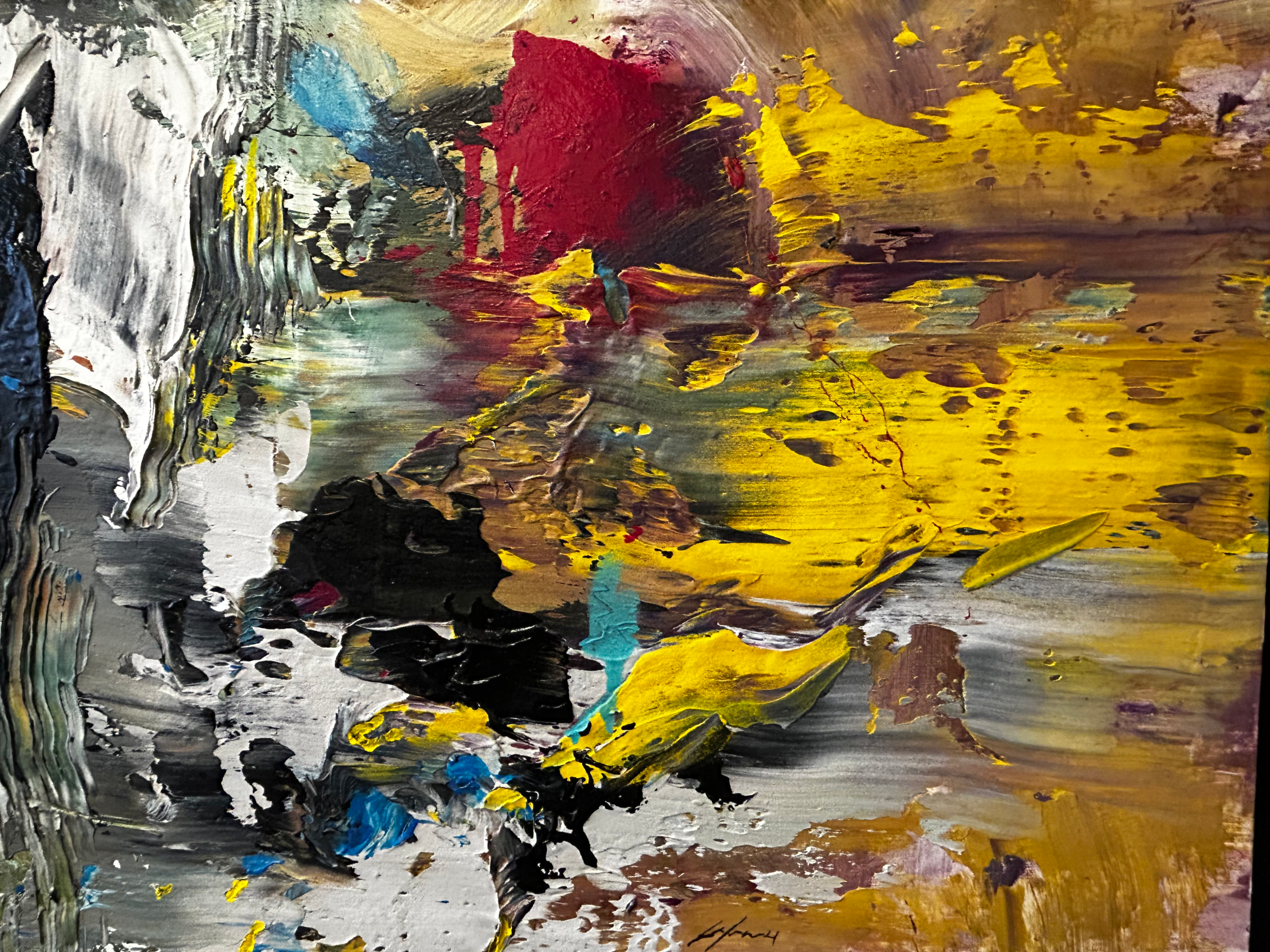
Artwork: Jean Lafrance, detail, Untitled, 2011
DATE
Saturday, April 25, 2026
10am – 12:30pm (Pacific Time)
Location
in person @ Arbutus Club
2001 Nanton Ave, Vancouver, BC V6J 4A1
Presenter
Endre Koritar
Discussant
Joanne della Penta
Chair
Bradley Murray
COST
Professional Registrant: $55
Student/Resident/Intern Registrant/ Analysis-In-Training (AIT): $45
WCPSI Member/Community Affiliate Member: no charge
Registration closed April 17th @ 5pm PST
The author explores the concept of trans-generational transmission of trauma in a brief review of the literature, excerpts from an analysis, in film scenarios, and he proposes a dynamic hypothesis for Putin’s invasion of Ukraine. Trans-generational transmission represents a complementary hypothesis to Freud’s phylogenetic theory of transmission of the Oedipus complex and drives. He reviews work by Abraham and Torok (1975), Apprey (2015), Faimberg (1988), Ogden (1987, 1989), and Garon (2004) in elaborating a hypothesis of generational transmission through identification with parental internal object relations. The paper explores concepts of the phantom, pluperfect errands, telescoping of generations, transitional Oedipal dynamics, and skeletons in the closet in trans generational transmission. The clinical material describes the impact that visiting the analysand’s little village and hearing stories about his family from relatives and neighbors in his mother tongue had on him. The pilgrimage to his hometown restored a sense of meaning in his life and a connection to the past and his roots. The discussion is extended from the clinical to the cultural, historical, and political dimensions. The author portrays elements of phantoms and pluperfect errands in Denis Villeneuve’s Incendies, Liev Schreiber’s Everything is Illuminated, and he suggests the pluperfect errand as a dynamic construct of Putin’s invasion of Ukraine. He uses Bion’s concept of reverse alpha function as a speculative hypothesis underlying the generational transmission of phantoms and pluperfect errands which can be considered as the equivalent of bizarre objects. The applicability of the pluperfect errand as a dynamic construct to different disciplines, the arts, politics, and history lends credence to its validity.
Endre Koritar, M. D., FRCP(C), FIPA, is a training and supervising analyst and Institute director with the Western Canada Psychoanalytic Society Institute. He is an Assistant Clinical Professor of the University of British Columbia affiliated with the Department of Psychiatry. He is on the Board of Directors of the ISFN, the National Council of the Canadian Psychoanalytic Society, the National Training Committee, and Editor-at-Large of the American Journal of Psychoanalysis. He is interested in researching and elaborating on the ideas of Sándor Ferenczi, who was a harbinger of contemporary psychoanalytic theory and technique.
Discussant’s Biography: Joanne della Penta ATR-BC, LMHC, FIPA is an adult psychoanalyst and art therapist in Seattle Washington. She works with Children, Adolescents and Adults.
After this presentation, participants can expect to:
1 To discuss the dynamics of transgenerational transmission.
2 To consider how the emigration experience impacts psychic development
3 To consider how pluperfect errands are portrayed in political and cultural forms.
Recommended readings (Optional)
-Apprey, M. (2014), A Pluperfect Errand: A Turbulent Return to Beginnings in the Transgenerational Transmission of Destructive Aggression. Free Associations, (15)(2):16-29.
-Faimberg, H (1988) The Telescoping of Generations: Genealogy of Certain Identifications, Contemp. Psychoanal., (24):99-117
– Garon, J. (2004) Skeletons in the Closet, Int. Forum Psychoanal 13(1/2):84-92
– Koritar, E. (2019) E. (2019) Working Out Phantoms of Trans-Generational Transmission of Trauma. AJP, 79(4):494-506.